Compliance • Mar 17, 2026 • 5 min read
Understanding Logistics Compliance: Why One Missing Document Can Delay Your Cargo
A single missing or incorrect document can do more than delay your shipment it can disrupt your entire supply chain. From customs holds and costly storage fees to missed deadlines and unhappy customers, the impact of poor logistics compliance is often underestimated. In this blog post, we explore why documentation is the backbone of every successful shipment, how even minor errors can trigger major setbacks, and the key documents you must always get right. You’ll also learn practical steps to improve your processes, avoid unnecessary delays, and ensure your cargo moves seamlessly across borders every time.

Oluwakemisola Olosunde
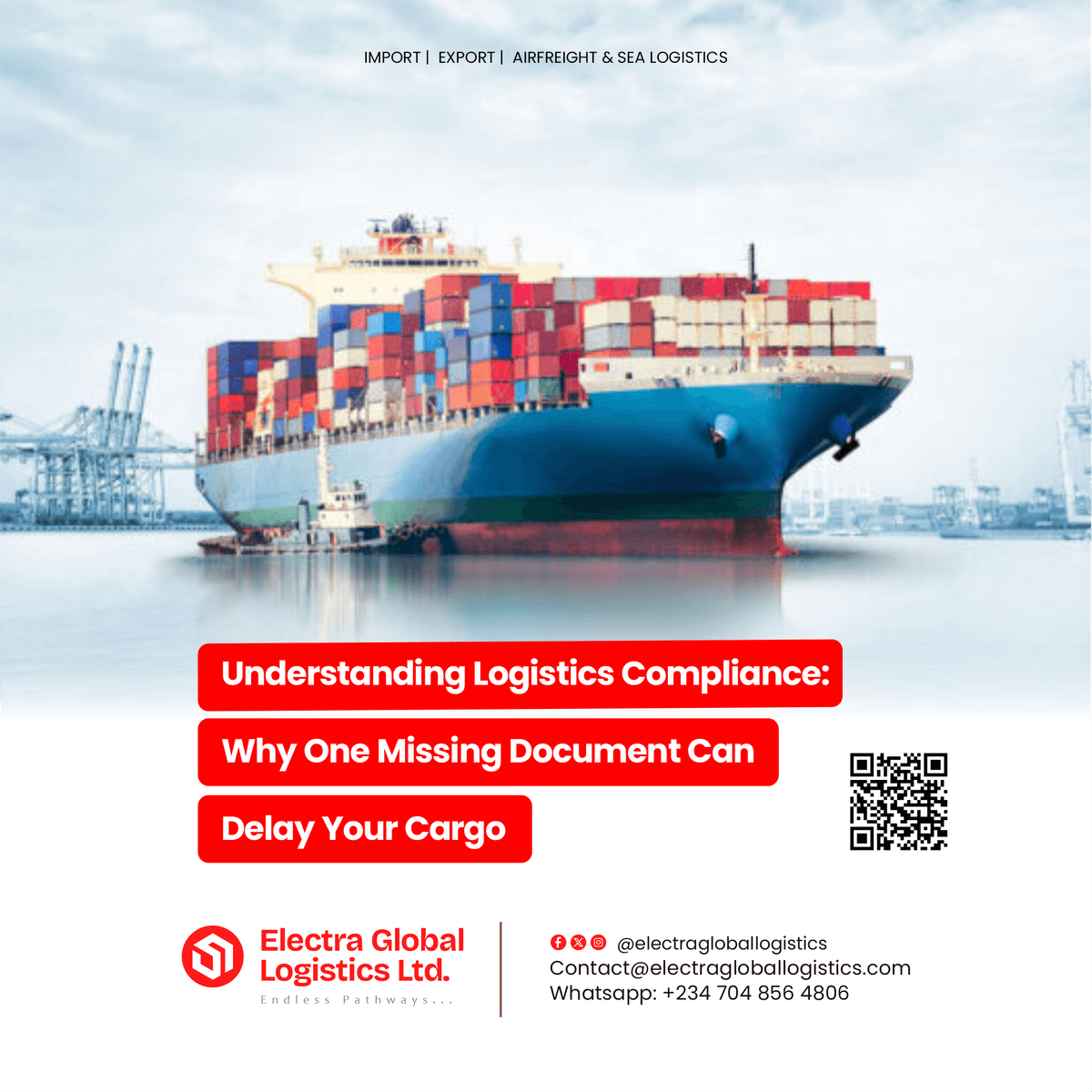
In logistics, speed is important but compliance is non-negotiable.
One missing or inaccurate document can stop an otherwise well-planned shipment at the border, trigger inspections, and lead to avoidable costs, delays, and dissatisfied customers.
In today’s global supply chain, documentation isn’t just paperwork it’s what keeps your cargo moving.
What “Logistics Compliance” Really Means
Logistics compliance is the discipline of ensuring every shipment meets regulatory, customs, and carrier requirements in every country it passes through.
It goes beyond booking cargo or printing labels. It’s about aligning your documentation, data, and processes with international trade rules.
In practical terms, compliance means:
- Providing the right documents, in the correct format, at the right time
- Ensuring all shipment details are accurate and consistent across documents
- Staying updated with changing customs regulations, permits, and trade agreements
When any of these elements are missing or incorrect, your shipment is flagged as a risk and that’s where delays begin.
How One Missing Document Can Stop Your Cargo
Customs authorities rely heavily on documentation to determine:
- What is being shipped
- Who is involved
- Whether the shipment complies with local laws
If even one key document is missing, clearance cannot proceed.
Common consequences include:
- Immediate customs hold until documents are corrected or submitted
- Physical inspections, adding days (or weeks) to transit time
- Storage, demurrage, and detention charges
- Missed delivery deadlines and stock shortages
A single missing document doesn’t just delay a shipment—it disrupts your entire supply chain.
The Core Documents That Must Never Be Missing
While requirements vary by country and cargo type, some documents are essential in almost every international shipment:
1. Commercial Invoice
This is the financial backbone of your shipment. It defines:
- Product value
- Buyer and seller
- Terms of sale
Without it, customs cannot calculate duties or validate the transaction.
2. Packing List
This document outlines:
- Quantities
- Weight and dimensions
- Packaging details
It allows customs and handlers to verify the physical contents of your shipment.
3. Transport Document (Bill of Lading / Air Waybill)
This serves as:
- Proof of shipment
- Contract between shipper and carrier
- Ownership and routing details
Errors here can delay both customs clearance and cargo release.
4. Certificates and Permits (When Required)
Depending on the goods, you may need:
- Certificate of Origin
- Import/export permits
- Health or safety certifications
If these are legally required and missing, your cargo simply will not move.
Why “Small” Documentation Errors Cause Big Problems
Even when documents are present, minor inconsistencies can trigger major delays.
What may seem like a small mistake to you can appear as a compliance risk to customs authorities.
Common issues include:
- Mismatched names or addresses across documents
- Vague or inconsistent product descriptions
- Incorrect values, currencies, or missing Incoterms
- Wrong HS (tariff) codes
- Missing signatures, stamps, or dates
Customs officials cannot assume correctness they must verify. If something doesn’t add up, your cargo is held until it does.
The Hidden Costs of Non-Compliance
The real impact of documentation errors goes beyond delays.
Financial Costs
- Demurrage, detention, and storage fees
- Fines or penalties
- Re-inspection charges
Operational Disruption
- Delayed production
- Missed launch timelines
- Emergency shipping costs to recover delays
Reputation Damage
- Loss of customer trust
- Strained relationships with partners and distributors
Internal Pressure
- Last-minute document corrections
- Time zone coordination stress
- Firefighting instead of planned operations
How to Build a “No Missing Documents” Culture
Most compliance issues are preventable with the right systems and mindset.
Here’s how to stay ahead:
- Use standardized, up-to-date document templates
- Implement pre-shipment checklists
- Ensure all departments work from the same data
- Train staff and suppliers on trade requirements
- Partner with experienced freight forwarders or customs brokers
A simple best practice:
Before any shipment leaves, run a quick checklist:
- Commercial invoice
- Packing list
- Transport document
- Required permits
If everything is complete and consistent, your cargo moves. If not, fix it before departure not at the border.
In modern logistics, speed isn’t just about transit time it’s about how quickly your cargo clears without issues.
A fast vessel or flight means nothing if your shipment is stuck due to missing paperwork.
One missing document can delay your cargo.
One solid compliance process can keep your entire supply chain moving.


