Industry Insights • May 12, 2026 • 6 min read
Understanding Less Than Truckload (LTL) Shipping and Why Businesses Are Choosing It
Not every business ships in large volumes every time. LTL shipping offers flexibility for companies whose shipment sizes vary from week to week or month to month. Whether you are restocking inventory, moving products between warehouses, or handling customer deliveries, LTL shipping allows you to adapt without committing to full truckload costs. In this blog post, we’ll break down why Less Than Truckload (LTL) shipping is becoming a smart choice for growing businesses, when it makes the most sense to use it, and how it can help you save costs while keeping your supply chain moving efficiently.

Oluwakemisola Olosunde
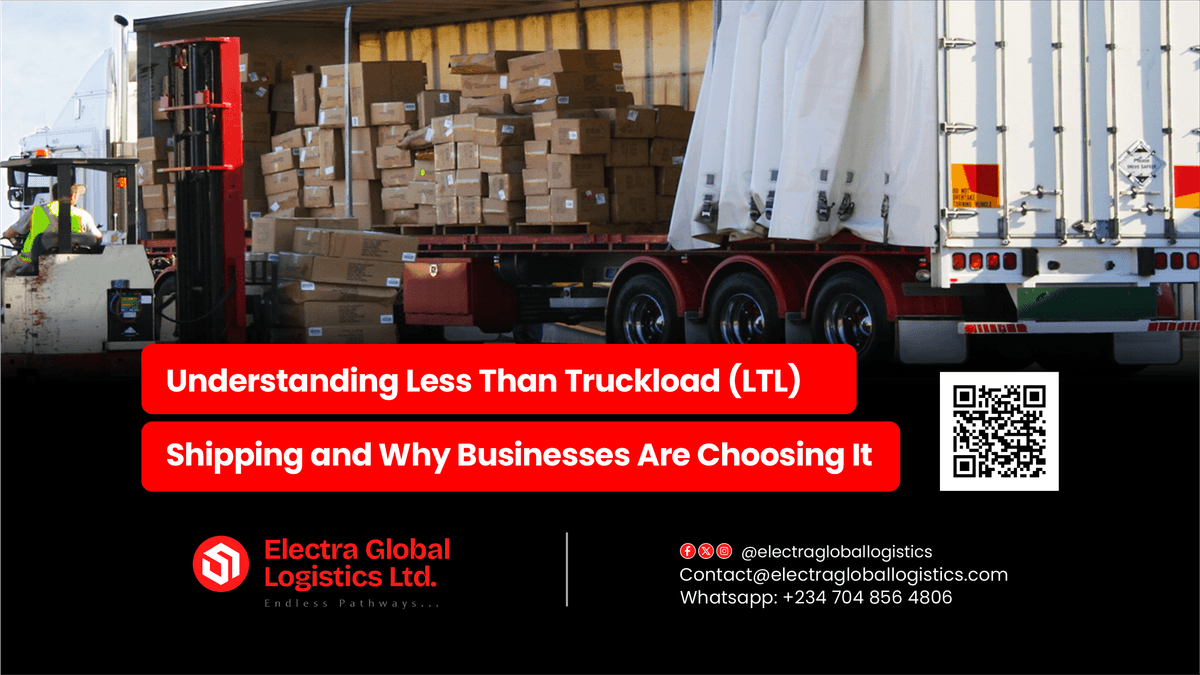
In today’s fast-moving business environment, companies are constantly looking for smarter and more cost-effective ways to move goods. Not every shipment is large enough to fill an entire truck, and paying for unused truck space can increase logistics expenses unnecessarily. This is where Less Than Truckload (LTL) shipping comes in.
LTL shipping allows multiple businesses to share space on one truck, making it a practical solution for companies shipping smaller freight loads. Instead of waiting until you have enough cargo for a full truckload, you can move your goods when needed while only paying for the portion of space your shipment occupies.
For businesses focused on efficiency, flexibility, and cost control, LTL shipping has become an increasingly valuable logistics option.
Why Clients Should Consider LTL Shipping
1. Cost Savings
One of the biggest advantages of LTL shipping is reduced transportation cost. Since several shipments share one truck, the shipping cost is divided among multiple customers. This means businesses avoid paying for empty truck space and can better manage their logistics budget.
For small and medium-sized businesses especially, this creates room for more consistent shipping without overspending.
2. Better Inventory Management
With LTL shipping, businesses do not have to wait until they have enough products to fill an entire truck before shipping. Goods can move in smaller quantities and at more frequent intervals, helping companies maintain steady inventory levels and reduce warehouse congestion.
This is particularly useful for businesses with fast-moving products or changing customer demand.
3. Flexibility for Growing Businesses
Not every business ships in large volumes every time. LTL shipping offers flexibility for companies whose shipment sizes vary from week to week or month to month.
Whether you are restocking inventory, moving products between warehouses, or handling customer deliveries, LTL shipping allows you to adapt without committing to full truckload costs.
4. Improved Delivery Efficiency
Because LTL carriers operate scheduled routes regularly, shipments can move quickly across regional and national networks. Businesses benefit from reliable transportation without having to arrange a dedicated truck for every shipment.
5. Eco-Friendly Transportation Option
Sharing truck space also reduces the number of partially empty trucks on the road. This contributes to lower fuel consumption and fewer carbon emissions, making LTL shipping a more environmentally responsible logistics solution.
When Should You Go for LTL Shipping?
LTL shipping is ideal in several situations, including:
Your Shipment Does Not Fill an Entire Truck
If your cargo weighs between approximately 150 and 15,000 pounds, LTL shipping is often the most economical choice.
You Ship Frequently in Smaller Quantities
Businesses that regularly move moderate amounts of goods benefit greatly from the flexibility and affordability of LTL transportation.
You Want to Reduce Logistics Costs
Instead of paying full truckload rates, LTL allows you to control transportation expenses while still maintaining regular deliveries.
You Need Faster Inventory Movement
Rather than waiting for products to accumulate into a full load, LTL shipping helps businesses move goods immediately and keep operations running smoothly.
Seasonal Demand Fluctuations
Businesses experiencing seasonal spikes or changing order volumes can use LTL shipping to manage transportation needs without overcommitting resources.
What Businesses Need to Prepare Before Using LTL Shipping
To ensure smooth operations and avoid delays, proper preparation is important.
1. Accurate Shipment Information
Provide complete and correct shipment details, including:
- Weight of the cargo
- Dimensions
- Number of pallets or cartons
- Pickup and delivery addresses
- Type of goods being shipped
Accurate information helps carriers plan space allocation and pricing properly.
2. Proper Packaging and Palletization
Since LTL shipments share truck space with other freight, secure packaging is essential. Goods should be:
- Properly boxed
- Wrapped securely
- Palletized where necessary
- Clearly labeled
Good packaging reduces the risk of damage during handling and transit.
3. Correct Documentation
Having the right paperwork ready helps avoid shipping delays. Important documents may include:
- Commercial invoices
- Packing lists
- Delivery instructions
- Bills of lading
- Customs documents for international shipments
4. Delivery Planning
Businesses should communicate delivery timelines clearly, including preferred pickup dates, operating hours, and any special delivery requirements.
5. Choosing the Right Logistics Partner
A reliable logistics provider plays a major role in successful LTL shipping. Businesses should work with partners experienced in freight coordination, cargo handling, route planning, and customer communication.
At Electra Global Logistics, we help businesses simplify freight movement through reliable and cost-effective logistics solutions designed to support growing supply chain demands. Whether you are shipping locally or internationally, our team is committed to helping your cargo move efficiently and safely.


