Industry Insights • Sep 15, 2026 • 2 min read
Too Much Stock, Too Little Space? Managing Storage During Peak Season
Businesses need enough stock to meet customer demand, but holding too much inventory for too long can create another problem: rising warehousing and storage costs. Storage overhead can come from more than warehouse rent. Depending on your arrangement, you may also be paying for handling, loading, unloading, inventory movement and extended storage periods. In this blog post, we’re looking at the hidden costs of excess inventory, what can drive storage expenses higher, and practical ways businesses can manage their inventory and logistics more efficiently without compromising product availability.

Oluwakemisola Olosunde
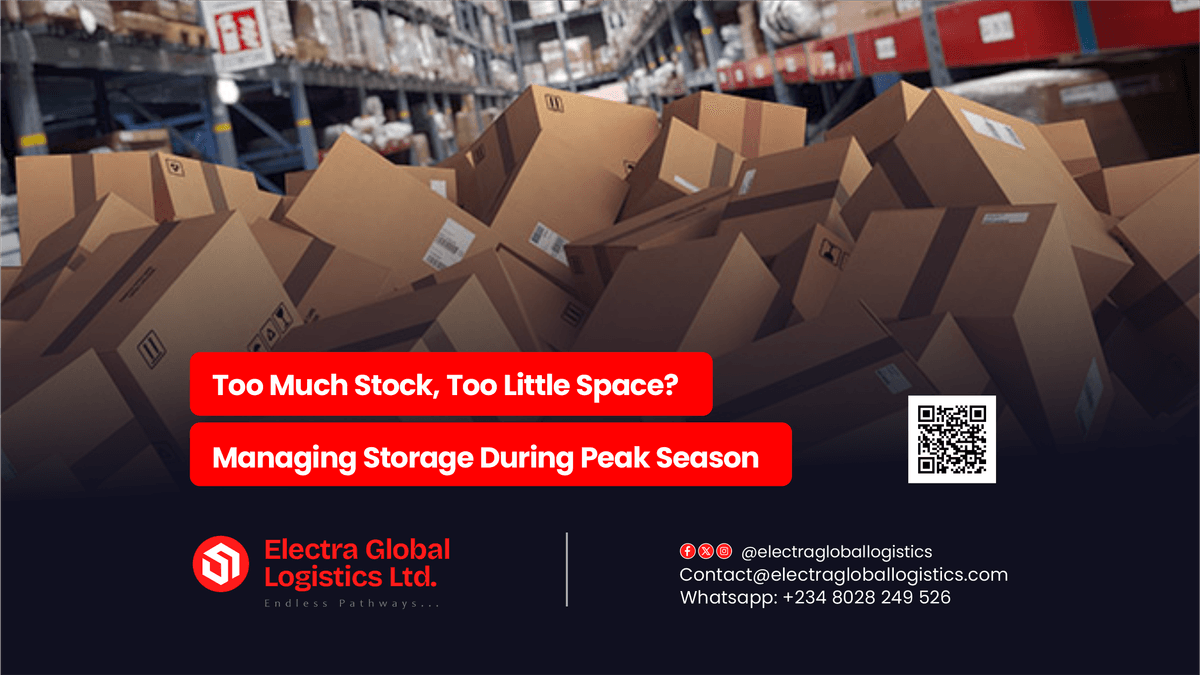
Peak season often comes with a familiar challenge: more inventory and less space.
Businesses need enough stock to meet customer demand, but holding too much inventory for too long can create another problem rising warehousing and storage costs.
The question is not simply, “Where can we keep the goods?”
It is, “How can we store them efficiently without increasing unnecessary costs?”
Understand What Is Driving Your Storage Costs
Storage overhead can come from more than warehouse rent. Depending on your arrangement, you may also be paying for handling, loading, unloading, inventory movement and extended storage periods.
When shipments arrive before you actually need them, these costs can continue accumulating.
Three Ways to Manage Peak-Season Storage
1. Plan your shipment timing
Avoid bringing in inventory too early if your warehouse or sales plan cannot accommodate it. Better coordination between purchasing, shipping and distribution can reduce unnecessary storage time.
2. Monitor slow-moving stock
Not every product moves at the same speed. Identifying slow-moving inventory can help you make better decisions about what needs to be replenished, relocated or held.
3. Have a backup storage plan
Peak periods can put pressure on your usual warehouse capacity. Having access to flexible storage options gives you room to respond when volumes suddenly increase.
Storage Should Support Your Business, Not Drain It
The goal of peak-season warehousing is simple: keep your goods safe, accessible and ready for customers without paying for more storage than you need.
With proper inventory planning and logistics coordination, businesses can handle high-volume periods more efficiently and avoid unnecessary warehousing expenses.
More inventory doesn't have to mean more storage headaches.


