Educational • Oct 6, 2026 • 8 min read
After China’s October Holiday: How Importers Can Avoid the Shipping Backlog
China’s October holiday is almost over, but the impact on shipping may continue as factories, suppliers, and logistics operations resume. In this blog post, we look at how post-holiday activity can create increased demand for freight capacity, trucking, and warehouse services, and what this could mean for importers shipping from China to Nigeria. We also share practical steps importers can take to prepare, from confirming supplier schedules and checking cargo readiness to getting documents ready and planning mid-October freight bookings early. Planning a shipment from China? Here’s how to stay ahead of the post-holiday shipping rush.

Oluwakemisola Olosunde
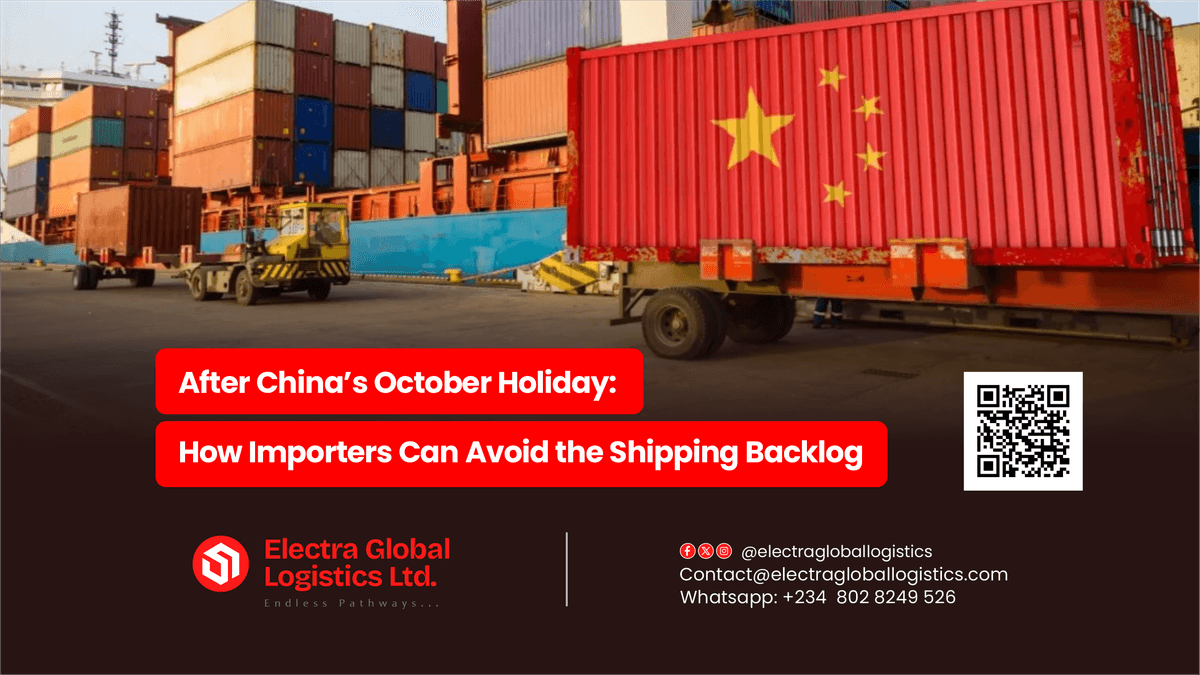
China’s October holiday period is almost over—but for importers, the real planning challenge begins as factories, suppliers, and logistics operations resume.
As businesses return to normal operations, orders and shipments that were delayed or placed on hold during the holiday period may begin moving again. This can increase demand for trucking, warehouse handling, and freight capacity, creating tighter schedules for businesses moving cargo from China to Nigeria in mid-October.
If you wait until your cargo is ready before you start planning, you may have fewer freight options, less flexible schedules, and more pressure on different parts of the supply chain.
What Happens When China’s October Holiday Ends?
China’s National Day holiday period runs from October 1 to October 7, although individual businesses may operate according to their own schedules.
As suppliers and logistics operations resume, there can be a buildup of pending activities, including:
- Orders awaiting production
- Cargo awaiting pickup
- Shipments waiting to be booked
These activities may begin moving through the supply chain around the same time, increasing demand across different stages of the logistics process.
This does not mean every shipment will experience a delay. However, the combination of accumulated orders and renewed logistics activity can put additional pressure on available capacity.
For importers, the important question is not simply:
“When will the factories reopen?”
It is:
“What happens to my shipment when operations start moving again?”
Why Post-Holiday Shipping Backlogs Happen—and How They Can Affect Your Shipment
Several moving parts can contribute to delays or tighter capacity after a major holiday period.
1. Production Schedules Resume
Suppliers may return to production with orders that were already in their pipeline before the holiday. This can affect when new cargo becomes ready for collection.
2. More Cargo Needs to Move
Once operations resume, multiple shipments may become ready for pickup around the same period. Increased demand for local trucking, warehouse handling, and freight bookings can put pressure on available capacity.
3. Freight Bookings Can Become Tighter
Importers who wait until cargo is ready before arranging transportation may have fewer sailing or flight options that match their preferred timeline.
4. Delays Can Move Through the Supply Chain
A delay at one stage can affect the next. A later production date can mean a later pickup, which can affect the booking, departure date, and ultimately the expected arrival date in Nigeria.
This is why shipment planning should begin before the cargo is sitting at the warehouse waiting to move.
What Importers Should Do Now: A Step-by-Step Checklist
If you are planning a China shipment for October, there are several practical steps you can take.
1. Confirm Your Supplier’s Reopening and Production Schedule
Do not assume that every supplier follows exactly the same holiday schedule.
Confirm:
- When they will resume operations
- When your cargo is expected to be ready for collection
- Whether their production or dispatch schedule will be affected immediately after the holiday
This gives your logistics partner a more realistic basis for planning.
2. Get Your Documents Ready Early
Commercial invoices, packing lists, HS codes, and other relevant shipping or regulatory documents should be reviewed early.
Missing or incorrect information can create avoidable delays when the shipment is ready to move.
3. Check Actual Cargo Readiness—not Just Order Confirmation
Know exactly when the goods will be available.
There is a difference between:
- An order that has been confirmed
- An order that is in production
- Cargo that is physically ready for pickup
Your freight plan should be based on the actual cargo readiness date, not simply the order date.
4. Start Freight Planning Before Cargo Is Ready
If you already know that you will have cargo ready in mid-October, begin discussing your freight options now.
Early planning gives you more time to:
- Compare schedules and transit times
- Secure space on preferred sailings or flights
- Adjust plans if production dates shift
5. Build Flexibility Into Your Timeline
Post-holiday logistics activity can be difficult to predict precisely.
Rather than assuming everything will move exactly according to the original schedule, allow reasonable time for possible changes in production, pickup, booking, or transit.
What to Expect in Mid-to-Late October
Even with good planning, some changes in logistics schedules are possible after a major holiday period.
Importers may encounter:
- Tighter freight capacity as more cargo enters the market
- Greater competition for trucking and warehouse space around key ports
- Potential schedule adjustments as carriers manage existing bookings and new demand
This does not mean every shipment will be delayed—but it does mean that early planning can give you more options when schedules change.
China to Nigeria Shipping: Why End-to-End Planning Matters
For Nigerian importers, the international freight leg is only one part of the journey.
Once cargo arrives, there may also be:
- Customs clearance
- Documentation checks
- Port processes
- Final delivery to your warehouse or customers
A shipment that leaves China on time can still face delays later if the documentation or clearance process has not been properly prepared.
That is why it helps to look at the shipment as one connected process, rather than treating freight booking, customs clearance, and delivery as separate activities.
Don’t Wait Until the Backlog Starts
The end of the holiday does not automatically mean every shipment will be delayed.
But it is a good reminder that logistics capacity, production schedules, and cargo readiness all need to be considered when planning an October shipment.
For importers with time-sensitive cargo, early preparation can make it easier to respond when schedules change.
Key takeaway: The end of China’s October holiday is not the finish line—it’s the beginning of a potentially busier period in the supply chain. Importers who plan their freight and documentation early can give themselves more options and reduce avoidable surprises in mid-to-late October.
Planning a Mid-October Shipment from China to Nigeria?
Speak with Electra now to explore freight options, review your documentation, and build a realistic timeline around the post-holiday shipping period.
At Electra Global Logistics, we help businesses coordinate end-to-end shipments—from freight forwarding and customs clearance to final delivery.
Your shipment has a destination. Let’s plan the journey properly.
Electra Global Logistics – Endless Pathways.


